Training
Your Elbow Doesn’t Hurt Because You Play Tennis
Your Elbow Hurts Because Force Isn’t Being Distributed Properly
Written by Sierra Nevels
If you’ve rested your elbow, iced it, stretched it — and the pain keeps returning — the issue likely isn’t your elbow.
It’s how your body is handling force.
Tennis and pickleball are explosive, rotational sports. They demand acceleration, deceleration, and repetitive gripping.
It’s a Capacity Gap
It’s a gap between the demands of your sport and the structural capacity of your body. When the system distributes force efficiently, the joints share the load. When it doesn’t, the elbow becomes the stress sink.
Elbow pain is usually not the problem. It’s the signal.
Our ASF coaches are educated to treat the root problem.
What “Tennis Elbow” Actually Means
Lateral Elbow Pain (Outside of the Elbow)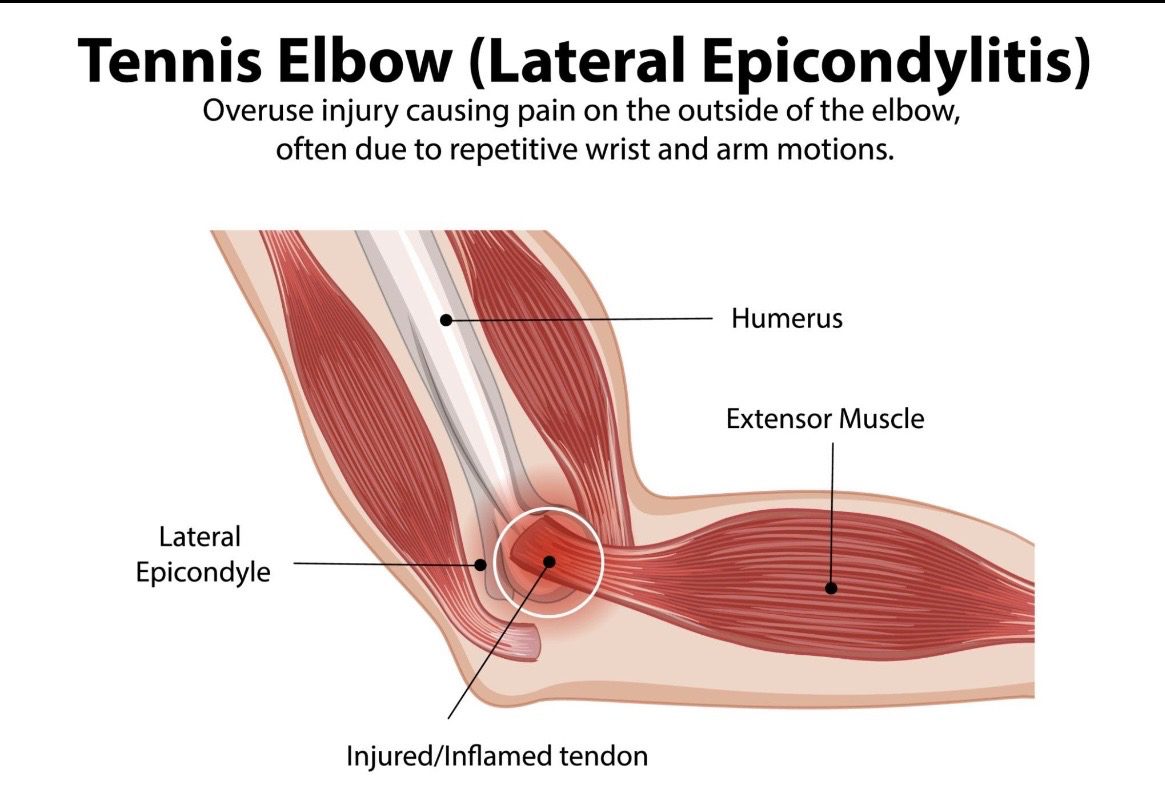
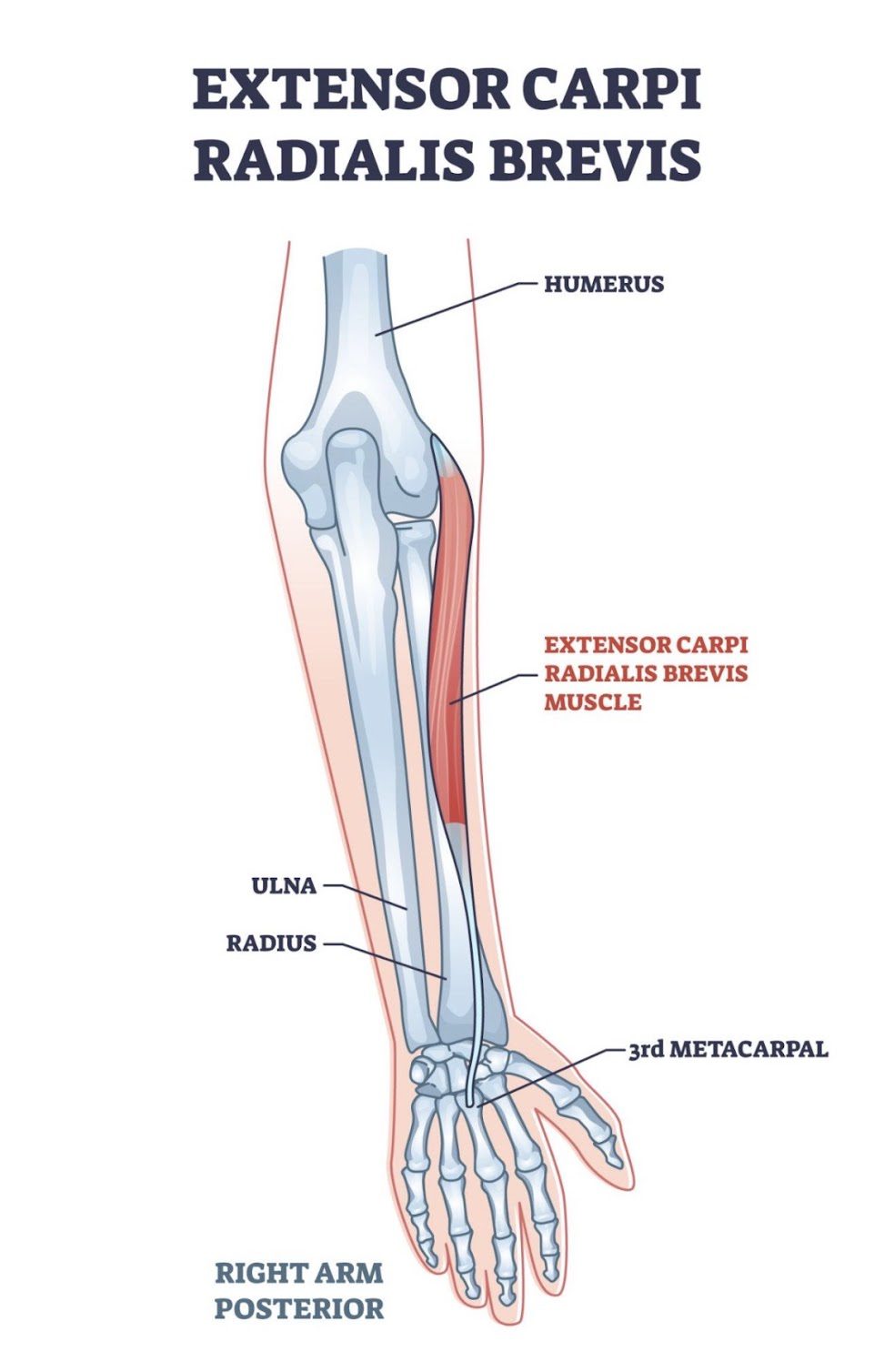
Often labeled lateral epicondylitis, this involves irritation of the wrist extensor tendons — particularly under repetitive backhand and gripping stress.
Common patterns we see:
- High match frequency without strength training
- Strong flexors, underdeveloped extensors
- Limited shoulder external rotation
- Poor scapular upward rotation
Medial Elbow Pain (Inside of the Elbow)
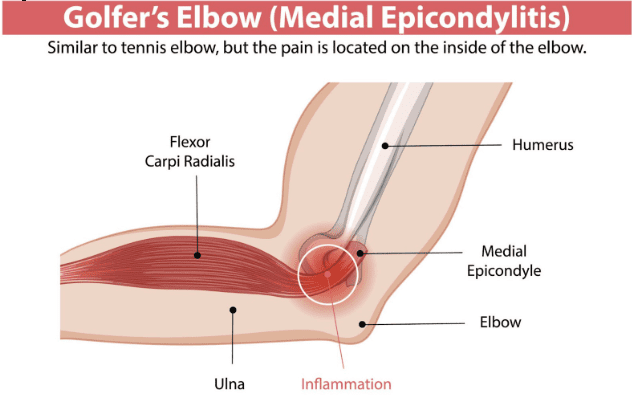 Often labeled medial epicondylitis, this involves irritation of the wrist flexor tendons.
Common patterns:
- Improper mechanics
- Grip-dominant mechanics
- Insufficient deceleration strength
But focusing on the tendon alone misses the larger system.
The Elbow Isn’t Just a Hinge
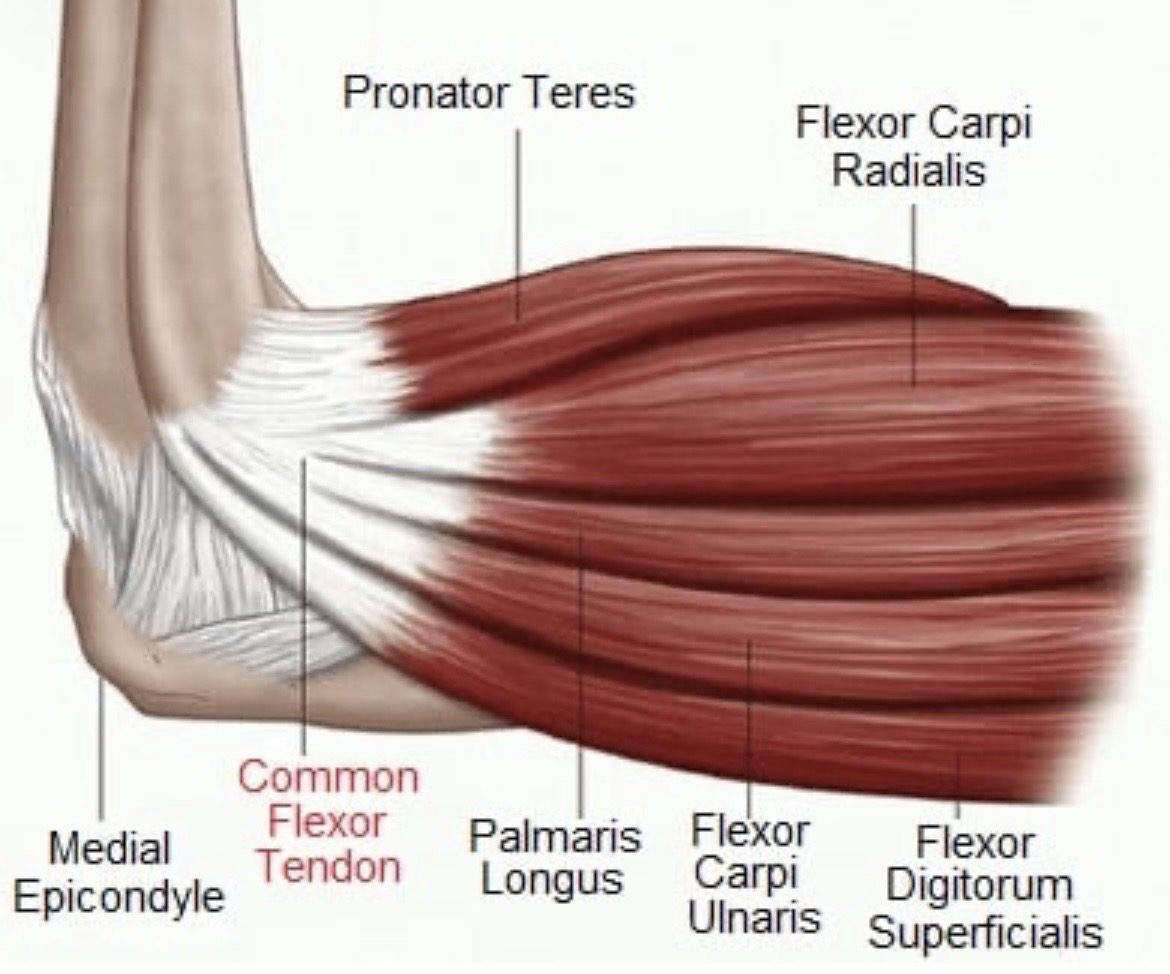
The elbow is often described as a hinge joint — designed primarily for flexion and extension. But in racket sports, it must also coordinate rotation through the forearm. Pronation and supination occur at the radioulnar joints, which function in close partnership with the elbow complex.
This means the elbow isn’t just bending and straightening. It’s also stabilizing while rotation happens at high speed.
If the shoulder does not rotate efficiently, or if the forearm lacks balanced pronation and supination strength, the elbow absorbs rotational stress it was never meant to handle alone.
It becomes both a hinge and a rotational stabilizer under load, and this is where problems begin.
The Kinetic Chain: Where the Stress Actually Begins
Force in racket sports follows a predictable path:
Ground → Hip → Trunk → Scapula → Shoulder → Forearm → Hand → Racket
When one link underperforms, the next compensates. If:
- Hip rotation is limited
- Trunk control is poor
- The scapula fails to upwardly rotate
- The shoulder lacks external rotation strength
The elbow absorbs torque that should have been distributed upstream. Elbow pain is almost always a downstream issue.
The Overlooked Variable: Deceleration Capacity
Most players train acceleration. Few train deceleration.
The elbow does not typically break down from creating speed. It breaks down from absorbing it.
During a serve:
- Internal rotators accelerate the arm
- The posterior cuff decelerates it
- The forearm stabilizes rotational forces
- The elbow resists shear stress
If deceleration strength is insufficient, tendons absorb repeated overload. Tendons adapt more slowly than muscle tissue. If sport volume increases faster than tendon capacity, irritation is predictable.
This is not simply a mobility issue, in most cases it is a structural capacity issue.
What Most Racket Athletes Get Wrong
- They stretch muscles that are weak instead of strengthening them.
- They rest tendons without improving tissue capacity.
- They train power before restoring control or building the prerequisites.
- They isolate the elbow instead of addressing the shoulder and scapula.
This is why symptoms often return as soon as play resumes.
Structural Balance: The Foundation to us at Austin Simply Fit
Structural balance simply means:
- Prime movers meet sport demands
- Antagonists are proportionally developed
- Stabilizers control force by limiting movement from things that are not supposed to be moving
- Joints above and below share load efficiently (proper load distribution occurring)
When structural balance improves, stress redistributes across the entire kinetic chain (sharing the load). The elbow stops being the weak link.
A Look into the Lens of an ASF Coach: The Three-Phase Model for Elbow Resilience
We don’t jump to heavy lifting.
We restore motion. We restore balance. Then we build strength through full ranges of motion.
Phase 1: Restore Passive & Active Range of Motion
A joint that cannot move well cannot distribute force.
Shoulder
- Full overhead flexion
- External rotation (especially at 90° abduction)
- Internal rotation (especially at 90° abduction)
- Horizontal abduction
Restricted shoulder motion shifts torque down the arm.
Scapulothoracic Joint
- Upward rotation
- Posterior tilt
- Controlled retraction and protraction
Limited upward rotation is one of the most common contributors to elbow overload.
Forearm
- Supination
- Pronation
- Wrist extension
- Wrist flexion
- Radial and ulnar deviation
Most players demonstrate:
- Adequate pronation
- Limited supination
- Tight flexors
- Undertrained extensors
Phase 1 restores:
- Passive mobility
- Active control
If you cannot control the end-range, you cannot safely load it.
Phase 2: Restore Structural Balance With Targeted Strength
Now we increase tissue capacity precisely.
Grip Strength: The Link Between Shoulder and Elbow Pain
One variable we consistently assess at Austin Simply Fit is grip strength. If grip strength is low relative to bodyweight, two things often happen:
- The forearm muscles fatigue quickly.
- The shoulder and elbow must compensate for unstable force transfer.
Weak grip can contribute to:
- Early forearm fatigue
- Increased elbow tendon stress
- Altered shoulder mechanics during deceleration
On the other hand, excessively dominant gripping without balanced extensor and supinator strength can also increase elbow stress.
We look at:
- How grip strength compares side to side
- How it relates to your pressing and pulling strength
- Grip endurance
It is a reflection of upper body integrity.
Forearm (Tendon Capacity Emphasis)
- 3–4+ second eccentric on wrist extension
- 3–4+ second eccentric on wrist flexion
- Loaded supination under control
- Radial and ulnar deviation strength
Extensors and supinators must match flexors and pronators.
Shoulder & Scapula (Deceleration Emphasis)
- External rotation at 0°, 45°, and 90° (train all angles)
- Serratus anterior strengthening
- Lower trapezius strengthening
- Posterior cuff strengthening
- Controlled upward rotation drills (scapulohumeral rhythm)
This restores deceleration strength and redistributes stress proximally.
Phase 3: Build Foundational Upper Body Strength Through Full ROM
After isolated work we integrate.
Pressing – Dumbbell
- Neutral or semi-neutral grip
- Full range of motion
- Natural scapular motion
Dumbbells allow dynamic joint centration and stabilizer engagement.
Pulldowns – Unilateral Variations
- Focusing on smooth scapulohumeral rhythm (proper timing)
- Balanced upward rotation and depression
- No forced downward rotation (proper timing)
The goal is movement quality under load.
Rows – Unilateral Variations
- Rhomboids
- Mid and lower trapezius
- Controlled retraction
This builds posterior shoulder stability and strength.
External Rotation & Trap 3
Non-negotiable for racket athletes.
These protect the shoulder and reduce elbow overload.
Triceps & Biceps
Balanced co-contraction improves shoulder and elbow integrity.
In racket sports, arm strength is structural — not just for aesthetics.
The ASF Way
Mobility
+
Structural Balance
+
Full-Range Strength
=
Resilient Elbows
Quick Self-Screen
Can you:
- Raise your arm overhead without lumbar compensation?
- Externally rotate your shoulder to at least 90°?
- Internally rotate your shoulder to 70-80°?
- Actively supinate your forearm under load?
- Perform 10 slow, controlled wrist extensions without fatigue?
If not, you may have a capacity gap.
The Bigger Picture
With the rapid growth of tennis and pickleball participation, many athletes are increasing weekly match volume without increasing structural capacity.
That imbalance is predictable.
Racket sports are fun – but they expose imbalance. If you want to play pain-free, recover faster, and compete for years — not just seasons — your training must be prepared to handle the demands of the game.
When You’re Ready to Address the Root Cause
If elbow discomfort continues to resurface — or you simply want clarity on how to stay ahead of it — the next step is assessment.
At Austin Simply Fit, we evaluate:
- Shoulder and scapular mechanics
- Forearm balance
- Deceleration capacity
- Full kinetic chain function
From there, training becomes precise and proactive — not reactive.
If you’d like to understand what your body needs to stay durable on the court, schedule a complimentary consultation with an ASF coach.