Training
Half Squats: The Shortcut That Steals Your Progress
Written by Sierra Nevels
Are we training to actually get stronger, or just to pretend we’re strong by cutting the range short?
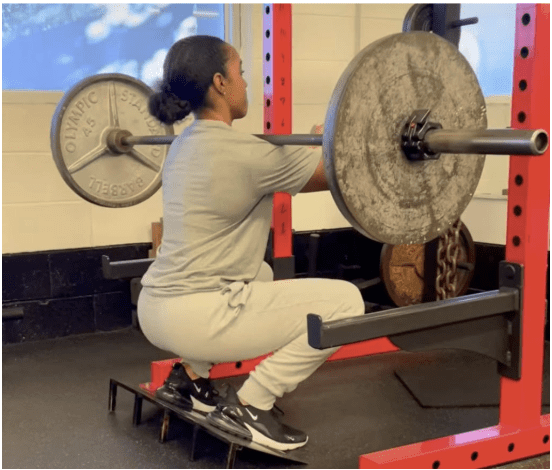
Half squats might make the bar look heavier and “cool,” but they’re quietly robbing your body of what it truly needs: stability, muscle balance, and longevity.
At Austin Simply Fit, we believe in training for health and longevity — because that’s what allows for greater strength and hypertrophy. Training through full ranges of motion builds the foundation for performance, muscle growth, and joint integrity. It’s not just about how much you lift — it’s about how well you lift, and how the lift looks, feels, and holds up over time, regardless of the weight on the bar.
Cutting squat depth might look stronger on paper, but it develops the exact weaknesses that limit long term strength and hypertrophy.
Half Reps, Half Results
Training only part of a movement doesn’t make you efficient — it makes you uneven. This imbalance, known as the principle of unequal tension, means certain joint angles and muscles become overdeveloped while others stay underdeveloped. The result? Instability, length-tension discrepancies, compensations, and eventually pain or injury. Most importantly, STALLED progress.
If you’ve ever wondered why your knees ache or why your squat plateaus, this is often the reason.
Deep Squats Protect Your Knees
Despite old myths, research consistently shows that full-depth squats strengthen, not destroy the knees.
- ACL forces peak at partial depths and decrease as you go deeper.
- Compressive forces at full depth actually protect the joint by improving stability and reducing shear stress.
That “pinch” many lifters feel halfway down? That’s where joint forces are highest. So rather than avoiding depth, remember: depth builds durability, performance, and growth potential.
Why Half Squats Build Weak Links
A lifter who can full squat 315 can partial squat 400+ with no problem. But a 400+ partial doesn’t mean they have a 315 full squat → quality exposes the truth. (Strength is range specific.)
Chasing heavier numbers in a shortened range is like building a house on a cracked foundation. You might get stronger at that one angle, but your stabilizers, connective tissue, and motor control never catch up.
Over time, that imbalance shows up as knee discomfort, hip instability, or chronic plateaus in both strength and hypertrophy.
Multiple studies confirm: lifters who consistently train to full depth experience less knee pain, greater strength gains, and more complete muscle development compared to those who cut range to chase load.
ASF’s Approach: Earn Your Partials
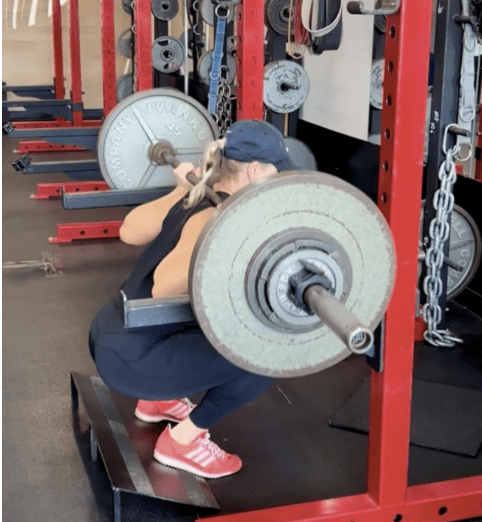 At ASF, we don’t demonize partial squats – they serve a specific purpose. In our Squat 2 template structure, partial squats are viewed as accessory tools, not primary lifts.
They’re used strategically to overload specific ranges, develop positional strength, and reinforce sticking points, but only after a foundation of full range, control, and stability has been built.
You have to earn your partials. They’re not a shortcut; they’re a refinement once movement quality and balance are in place.
“Don’t rob Peter to pay Paul.”
Don’t rob yourself of developing the attributes that drive health, longevity, strength, and hypertrophy just to pay for a “bigger” lift on the bar.
Train for Longevity, Strength, and Growth — Not Ego
At ASF, health and longevity aren’t separate from strength and hypertrophy – they make them possible. Training through full ranges builds structural balance, joint integrity, and efficient force production, which all translate into better performance, growth, and resilience over time.
Our goal isn’t just to lift heavy — it’s to move well, efficiently, and without limitation.
Disclaimer: This principle may differ when specific structural issues exist — such as ligament absence, knee replacements, or other surgical alterations that permanently change joint mechanics. In these cases, depth and exercise selection should be adjusted to respect structure while maintaining the intent of full, controlled movement within the individual’s safe range.