Client Highlights
Fit for Life: Conor Cunningham Celebrates 10 Years of Training
Congratulations to ASF client Conor Cunningham! Conor has been working with Sierra Nevels for the past 10 years and has made significant changes in his life. He is a testament to how consistency over time and focusing on health first can snowball into amazing progress. Read on to learn more about his strength and fitness journey.
Reflection on Your Journey
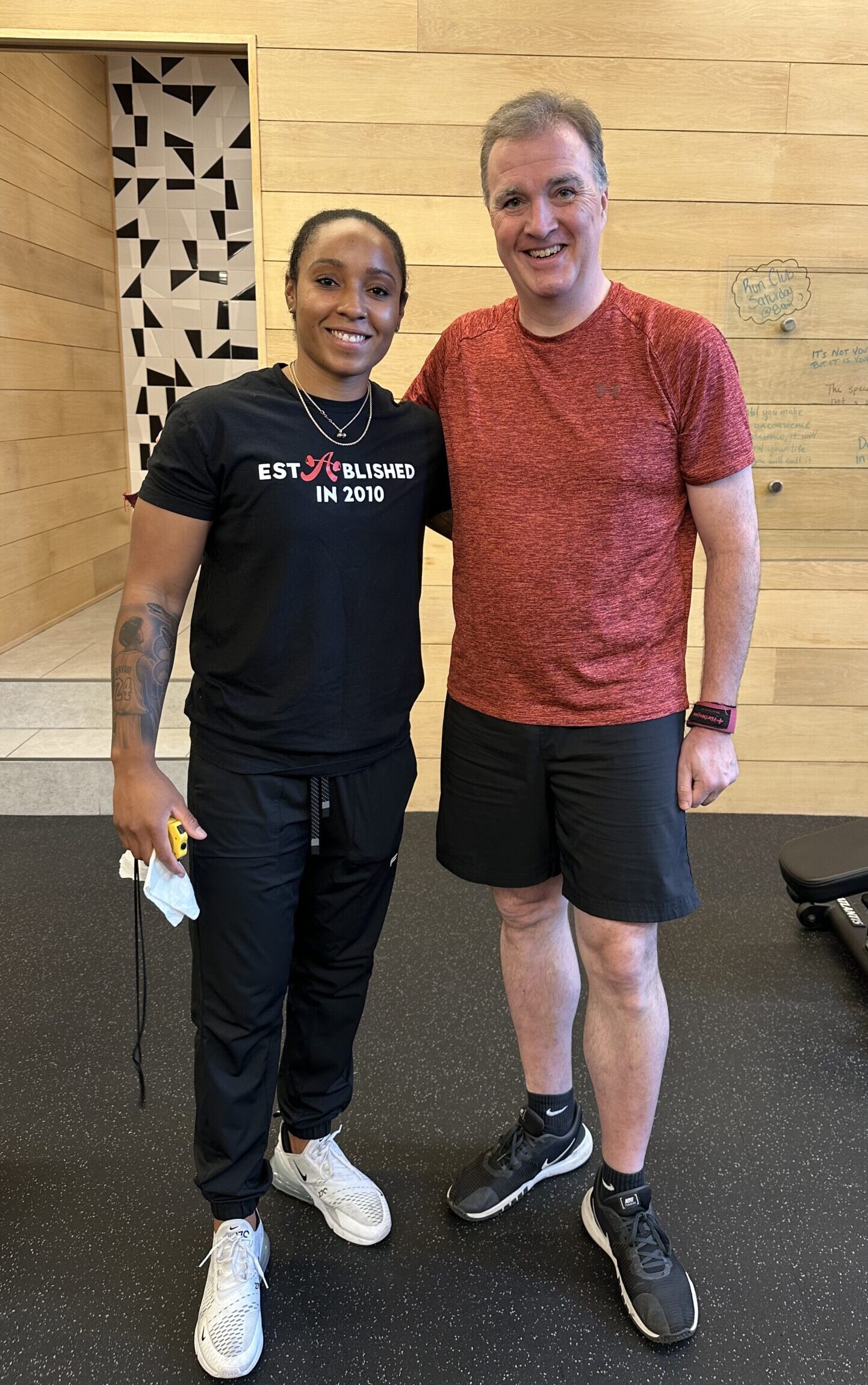 Thinking back to when you first started with Austin Simply Fit, what were some of your initial goals, and how have they evolved over time?
I’ve been coming to ASF for 10 years now, and my goals have evolved over time. Initially, I had two reasons to start coming to the gym. First, I had gone through ups and downs with my weight and had lost weight by under-eating. Then I bought a kayak and found that I had trouble getting it on top of my car because it was bulky but also because I just wasn’t really strong enough. So, I wanted to start investing in myself to improve my core strength and help with things like kayaking or skiing.
Second, my marriage was ending and I had a lot of negative energy to get out. It turns out that throwing medicine balls until you can’t lift them anymore is actually a pretty good way to help deal with that. It didn’t fix things, but it helped get me to a point where I could move forward with my life more quickly than not.
Later, my reasons to come to ASF evolved. I have a busy and somewhat stressful job. I look forward to coming because that resulting puddle of sweat helps me get that stress under control. I enjoy that I can see week-over-week progress if I listen and focus on all the little things I must do to improve (sleep, eating, other exercise). It’s a rudder for my day and it helps keep me thinking about “me” enough to make real investments in my future health.
As you know, ASF believes in the principle that ‘Health Drives Performance‘ first. What does that mean to you personally, and how has it shaped your approach to training and your progress over the months or years?
Beyond managing stress, working out at ASF helped me expose physical limitations I’ve had due to working at a computer for many years. I started seeing a physical therapist who helped me improve my posture and range of motion – I can see that is improved at the gym. I also have had to really work on making sure that I eat better because I was not making great choices on food from the pandemic onwards (eating out too much, not exercising enough to cover my calories each day, etc). I’ve had to work hard on this, and Sierra has helped me identify and tune my diet, exercise, and all the other factors so that I can make better progress at the gym with her.
How did your ASF coach help you understand the relationship between your health and your performance in the gym?
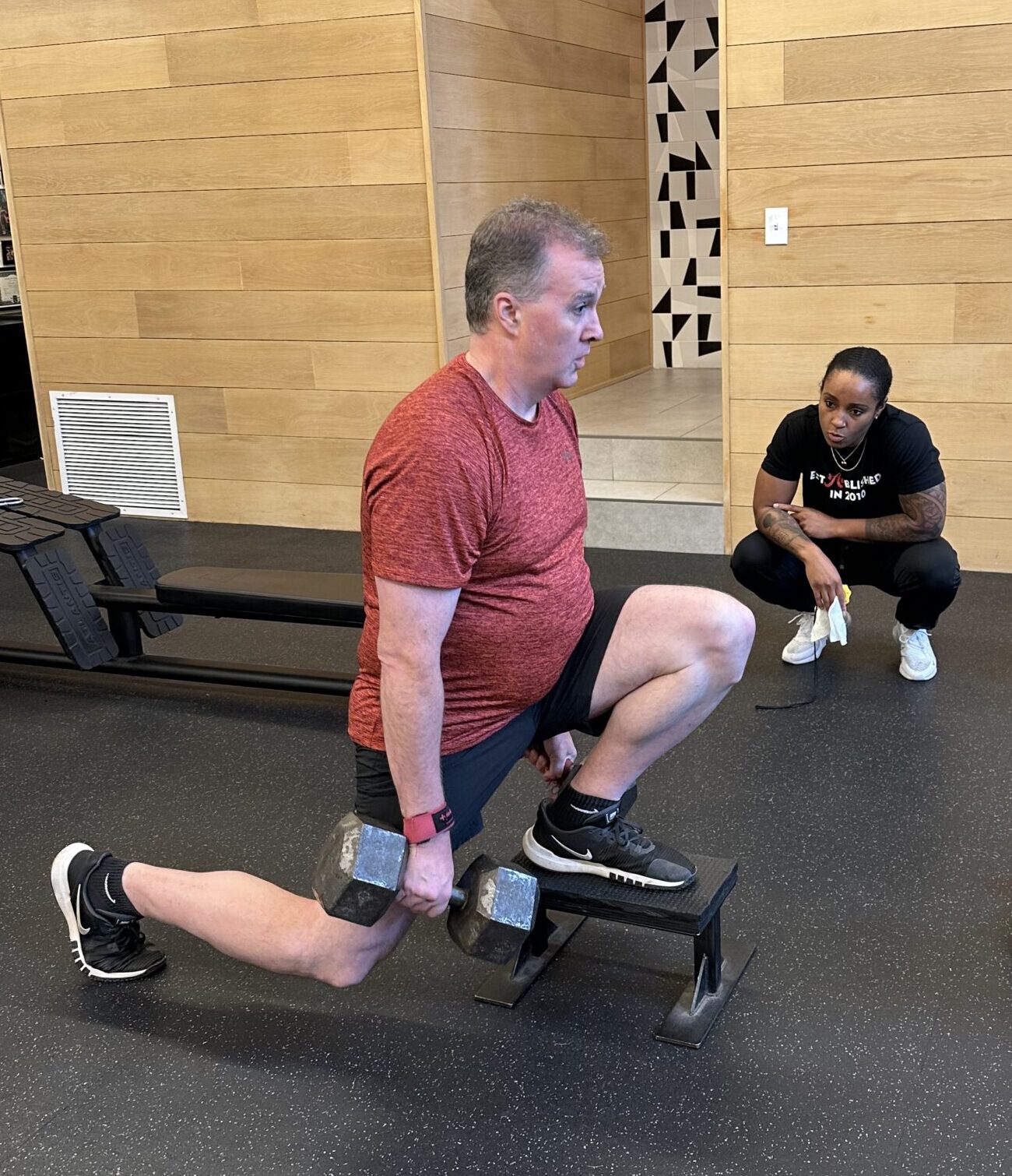
Sierra has spent a lot of time nudging me to get better about my eating, to walk more, to work on my posture, and to manage stress. I’ll admit that at times I haven’t initially understood or turned into action the lessons on how these contribute to whether I can lift whatever I’m trying to lift. However, as I’ve worked on more complicated exercises with her, it becomes obvious quickly if I haven’t eaten enough carbs or gotten enough good sleep the prior night. I’m still working on controlling things like stress that can get in the way of my progress at the gym, but I have tried to be deliberate and work on the upstream factors in my life so I can avoid or mitigate stress, and it does show up when I try a hard exercise with Sierra.
 What were some of the key pieces of education or advice they gave you that really made a difference?
The two largest things that have helped me in the past year or so are the advice to see a PT to improve my shoulder and back and her help in resetting my diet. I worked to reset my diet and get enough protein and to control my carb intake so that I could get my weight under better control. I have lost 35 pounds, dropped blood pressure, and while I have some more work to do, I have changed what I eat to get at least 1 gram of protein per pound of body weight and to get carbs mostly from vegetables on days when I am not working out.
How many times a week do you typically train at ASF?
I train 3 times a week. I used to travel for work at least one week a month, and when I missed training I stepped backwards in my progress. Consistency is key to making progress for me.
How consistent have you been with your training sessions? Do you find it easy to stay on track? If you miss a session, do you reschedule with your trainer or another ASF coach to keep your momentum going?
I’ve worked out with most of the trainers at least once, so other than when I travel I try to get a sub if either I can’t make my normal time or if Sierra is busy.
In what ways have you noticed changes in your body composition, muscle mass, stress levels, or overall movement quality since starting with ASF?
I have moved from using the gym as a crutch to manage stress to trying to actively control stress earlier in my day. It helps in lots of little ways. Looking holistically at my time at ASF, I learned to do pull-ups, pushups with chains on my back, and to deadlift hundreds of pounds. I just try to beat whatever number I got last time and stick to the process more than trying to weigh a certain number or look a particular way. I like investing in myself, and this is a direct way to do that.
 Can you share a specific moment where you realized your performance improvements were directly linked to your improved health?
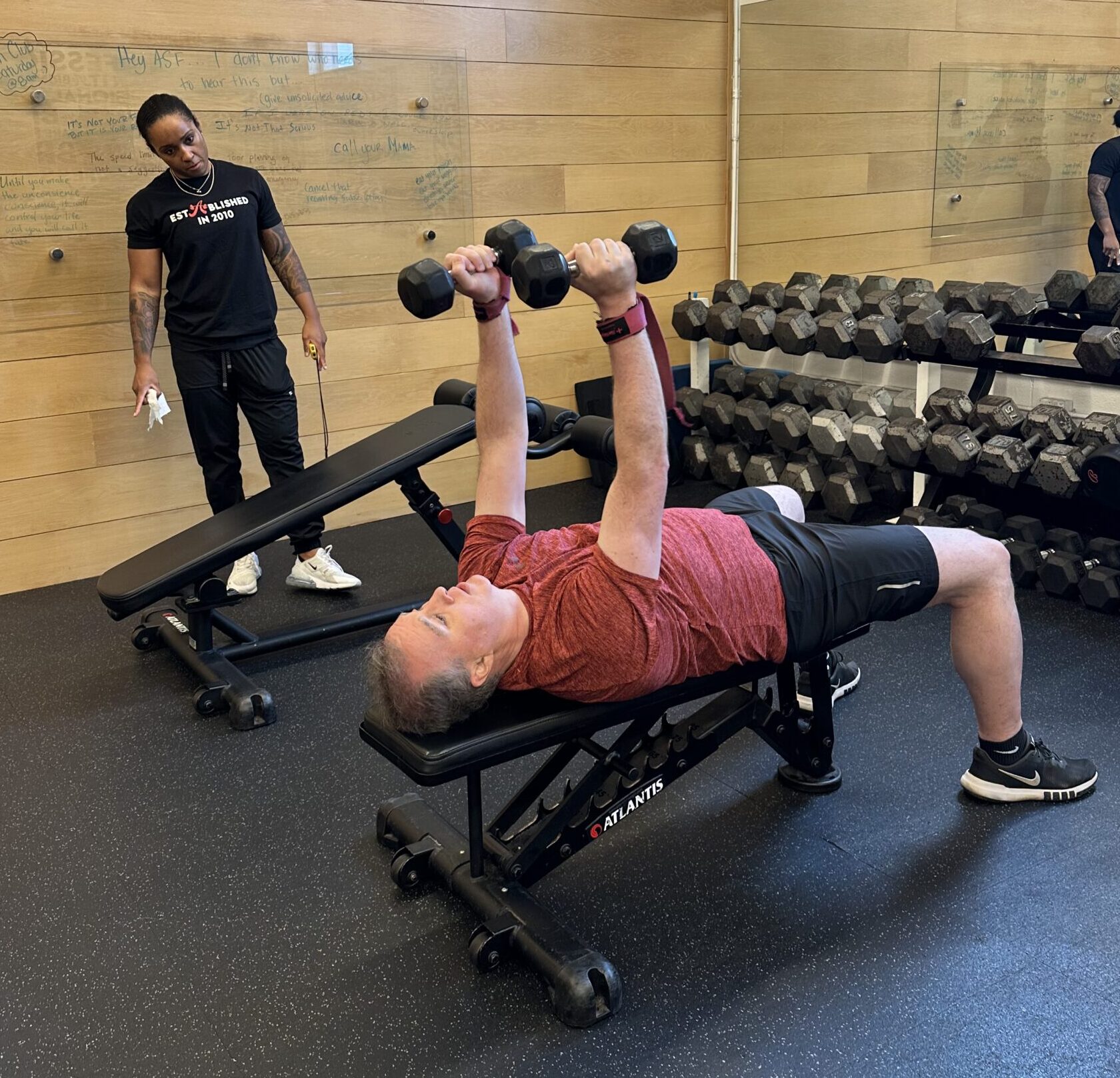
When I started at ASF, I had never done strength training previously. I had done other kinds of exercise, but it was always just “for fun”. So, it took me time to learn to listen to my body and understand how to properly interpret what it told me and how to understand what my trainer was telling me. I’d say that my learning has been gradual and that, as I got into harder exercises (more weight, more isolation of specific muscles, and more balance required), I had to practice more to master the movements. When I got to a base level of understanding on an exercise and then started making progress on increasing weight or whatever the goal was, then I had to try and fail until I found the right combination of preparation such as eating correctly, stretching, and getting stress management right.
What continues to motivate you to train at Austin Simply Fit and stay committed to your journey?
ASF is my third space. I’m not special, but I get to interact with people who are all trying to get better. I find that motivating no matter where they are on their journey.
Have you utilized ASF’s additional tools like Keyspan for lab work and personalized supplementation? If so, how have these tools helped you both in the gym and in your daily life?
I use Keyspan. I’d say that I am still trying to figure out how to move the various metrics it identifies to be better and I am still early on that journey, apparently.
What do you love most about working with your ASF coach and the ASF community?
I get great coaching. Sierra sets high standards and pushes me to achieve more than I could when I started. I enjoy getting better at things that are initially hard for me. I learn from her and eventually can internalize that into what I need to practice and improve.
Is there anything else you’d like to share about your transformation journey that might inspire others?
It’s great to have a place where I can work on self-improvement. I hope others can find their path. Mine has been a journey, for sure, but I am very happy that I have gone down this path and wish I had started earlier, honestly.
In your own words, how has focusing on health improvements like better body composition, lower stress levels, and improved lab results impacted your overall performance and quality of life?
I’m not strictly trying to achieve some perfect metric on body composition, but losing weight has helped me be able to push myself further at the gym. I am trying to do challenging things at the gym. As I get into harder weightlifting (squats or deadlifts, for example), there are a lot of little details that need to be right for you to make progress and to avoid injury. The keys for me on this have been stress management and some PT to help with getting my body closer to textbook on range of motion in a few places.
What advice would you give to someone just starting their journey at ASF about the importance of prioritizing health to drive their performance?
I look at how my life will be in 20-30 years and realize that investing in my health is one of the few things I can control in my life. It takes persistence and discipline to do this, but it’s also not that hard once you make it a habit. I’d like to be older and have better quality of life in retirement. A lot of the “easy” things in the US don’t help you, from fast food to having too sedentary of a lifestyle. Once you see that you can easily improve with a few incremental changes, you can get started on being healthier and happier. It’s helped me a ton, and I hope it can help you too.
If you’re ready to take the next step in your fitness journey, click here to schedule a free consultation and structural balance assessment!